Hey everyone, it’s Araminta!
In this newsletter, I want to talk about getting leadership buy-in.
It’s one of the most crucial skills for marketers, yet it’s one of the least taught. Of all the senior marketers I speak to, the one thing they consistently highlight is that speaking the language of leadership is what separates a good marketer from a great one.
That’s why we often support clients in building the business case to invest more in content, SEO, or optimizing for LLMs
For example, we’ll sometimes build a simple financial model. It takes content investment—whether that’s SEO, LLM optimization, or anything else—and translates it into numbers like revenue, ROI, and projections. At the end of the day, that’s what leadership wants: a clear business case and a sense of the results they can expect.
You can see an example here:

In this model, we’re using the number of keywords that the company is ranking for as a predictor of how many leads, SQLs, and customers this will generate. In this case, the company is ranking for 2,500 keywords, and their competitors are ranking for many more. By creating the right type of content and targeting more “buying” keywords, we can set some projections of how this would translate into more revenue.
It’s not a super sophisticated model, but it’s a good place to start if you’re building a business case for your leadership. In this case, investing $84,000 into content could translate into almost $1M in revenue – that’s a pretty good business case.
Putting this together and sharing it with your CFO means you’re speaking their language. CFOs are under pressure to justify spend, balance budgets, and hit revenue targets. Giving them clear numbers makes it much easier to weigh your proposal against everything else on their plate. It means they can finally assess a lot more comfortably what you’re proposing.
Over the years, here are a few things I’ve noticed are crucial to speaking to leadership:
- Speak their language: talk about leads, deals and revenue. Avoid jargony marketing words like backlinks or impressions. Show them what the investment will return, how it compares to alternatives, and how it supports the wider business goals. Leadership understands numbers, so you want to use them as much as possible. Yes, it’s often all estimates, and these things can never truly be predicted, but it helps them understand
- Lean on a top-down or bottom-up approach (or both): A top-down approach involves first looking at what competitors are doing and using their performance to argue your own strategy. A bottom-up approach means using internal data to assess what the opportunity is. Often you want to use a mix of both to present your case.
- Know how to tell a story: this is where a tool like DreamData or WhatConverts really helps, where you can showcase the journey of a user, and demonstrate how a user has to visit multiple pieces of content before converting
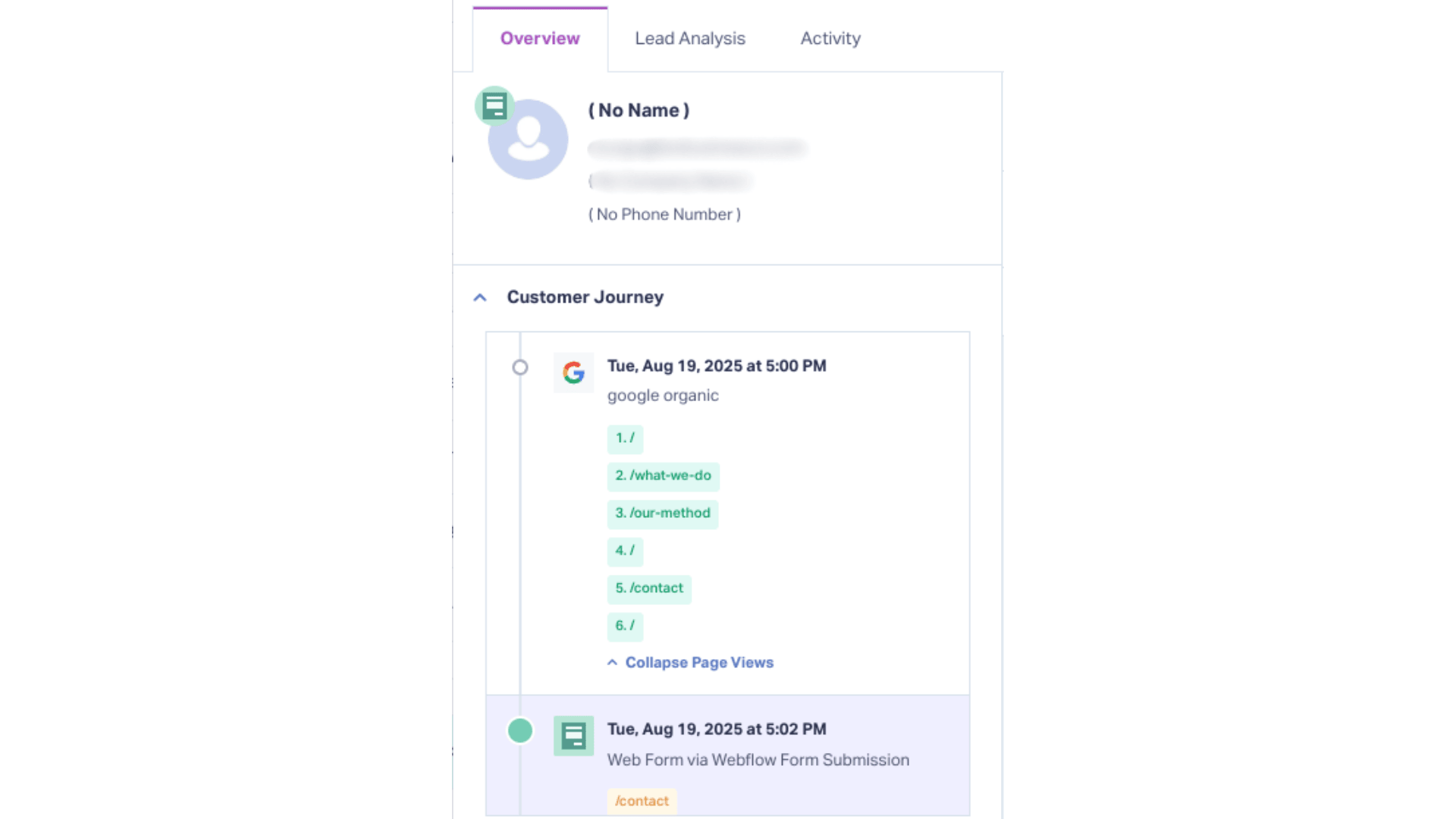
- Know the level of understanding of your audience. If your audience knows very little about marketing, use a lot of analogies and graphics (like these), and don’t be afraid to ask your audience to think about their own buying habits to understand how this works.
- Be honest and transparent. If something isn't working within 3 months, it’s better to be honest and explain what you’re doing about it, rather than obfuscating the numbers. Transparency builds credibility, and credibility buys you the trust and time you need to turn things around.
As a marketer, being able to get buy-in from leadership is one of the best skills to build, and it's what gives you an edge when it comes to building an effective strategy.
It’s what allows you to secure budget, push new initiatives forward, and influence strategy beyond just campaigns. When leadership sees that you’re transparent, that your experiments are backed by data and digestible numbers, and that you can clearly explain the outcomes, they’re far more likely to give you the room to test ideas and build.
(If you’re interested in playing around with the financial model example above, respond to this email and I can share it with you!)
Thanks for reading!
Araminta
Mint Studios Recommended Reads
- Tom Critchlow’s course on Executive Presence (aka speaking to leadership about SEO)
- How to Measure the Impact of Content Marketing in a Fragmented SEO Landscape
- ow Fintech Companies Do Content: Why ComplyAdvantage Gets Better Results with Less Content (Will shares how he uses DreamData to tell a story)